Plymouth, MA · Plymouth County
Basement Water Damage Restoration in Plymouth, MABasement Dehumidification & Basement Floor Water Removal
Homeowners in Plymouth get Basement Water Damage Restoration for emergency basement flood cleanup, basement wall drying and basement mold prevention.
Answered 24/7
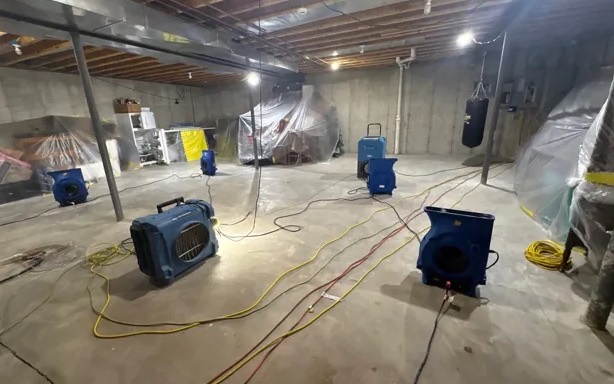
Basement Water Damage Restoration Solutions in Plymouth, Massachusetts
Basements collect water from every direction: rain seeping through walls, groundwater pushing up through the slab, sewage backing up through floor drains and pipes bursting overhead. In a Plymouth home with a basement or below-grade room, any of these can leave inches of water on the floor.
Homeowners in Plymouth can call (508) 978-2876 day or night when water is rising in the basement. Service also covers Kingston, Duxbury and Marshfield, with the same pumping and drying steps.
Complete Basement Water Damage Restoration for Plymouth
Basement Dehumidification
A basement with no moisture problem before the flood may still need a dehumidifier afterward while the concrete dries.
Basement Floor Water Removal
Water on a concrete floor is squeegeed and extracted, and floor coverings such as carpet, vinyl or laminate are lifted to dry the slab.
Basement Sewer Backup Cleanup
Porous materials touched by sewage, such as carpet, pad and lower drywall, are removed. Concrete and framing are cleaned and disinfected.
Basement Wall Drying
Concrete and block walls are dried with directed airflow and dehumidifiers, and checked with meters until readings drop.
Basement Water Extraction
Extraction starts at the lowest point, often near the floor drain or sump, and works outward until no pooled water remains.
Indicators for Basement Water Damage Restoration in Plymouth
Standing Water in the Basement
Any standing water on the basement floor needs pumping right away, before it soaks walls and framing.
Condensation on Windows or Pipes
Water beading on cold pipes or basement windows shows high humidity that keeps materials damp.
Damp or Musty Odors
A damp, earthy or musty smell in the basement often means hidden moisture in walls, carpet or the slab.
Efflorescence on Concrete Walls
White, chalky deposits on concrete walls mean water is moving through the concrete and leaving minerals behind.
How Basement Water Damage Restoration Works in Plymouth
Step 1: Floodwater Pump-Out
Submersible pumps remove deep water, and electrical hazards are checked before anyone walks in it.
Step 2: Deep Moisture Extraction
Extractors pull water from carpet, pad and the concrete floor after the deep water is gone.
Step 3: Air Circulation and Drying
Air movers keep dry air moving across walls and floors throughout the basement.
Step 4: Dehumidification and Verification
Dehumidifiers run until humidity and material readings confirm the basement is dry.
Frequent Sources of Water Damage in Plymouth
Clogged Floor Drains
A floor drain blocked by debris cannot carry off water from a leak or overflow, so it spreads across the basement floor.
Overland Flooding From Storms
Heavy storms and snowmelt can send surface water into basements through doors and walls.
HVAC Condensate Line Overflow
A clogged furnace or air conditioner condensate line can overflow onto the floor of a basement or lower-level utility room.
Sewer Line Backups
A blocked or overloaded sewer line pushes wastewater up through basement drains and toilets.
Both Residential & Commercial Basement Water Damage Restoration in Plymouth
Residential Basement Water Damage Restoration
Homeowners with older basements may have seepage that returns with each storm. Drying fixes the current damage, and the source is noted for a waterproofing contractor.
Commercial Basement Water Damage Restoration
Apartment and condo buildings with shared basements or lower levels may have laundry and storage below grade. Each area is extracted, dried and recorded for the building manager.
Basement Water Damage Restoration: Professional Help vs. Doing It Yourself in Plymouth
If a small leak left a puddle on bare concrete, a wet vac and a dehumidifier may be enough. Call local water damage pros if water reached drywall, carpet or framing, or if it came from a sewer drain.
What Influences Basement Water Damage Restoration Cost in Plymouth
A basement pumped and dried right away in Plymouth usually costs less than one left wet for days, when more drywall and flooring are lost.
Drying Time Required
Basements dry slowly, and longer drying means more equipment days and monitoring visits.
Access Complexity
Narrow stairs, low ceilings and stored contents can make the work slower.
Affected Square Footage
Larger basements need more extraction, more drying equipment and more days of drying time.
Does Insurance Cover Basement Water Damage Restoration?
Photograph the water level, damaged belongings and appliances before cleanup starts, and keep receipts for emergency pumping and drying to send to your insurer.
Reasons to Hire Local Pros for Basement Water Damage Restoration in Plymouth
Containment Strategies
Plastic sheeting keeps contaminated areas separate from clean parts of the house.
Industry Drying Standards
Drying follows industry water damage standards, with readings taken at every visit.
Industrial-Grade Equipment
Pumps, extractors and large dehumidifiers remove water much faster than household wet vacs and fans.
Round-the-Clock Emergency Basement Water Damage Restoration in Plymouth
A flooded basement damages walls, furnaces, water heaters and belongings quickly. Call (508) 978-2876 for basement water damage restoration in Plymouth at any hour.
Call Now (508) 978-2876Basement Water Damage Restoration Serving Plymouth, Kingston, Duxbury and Marshfield
Basement water removal and drying also cover homes and buildings in Kingston, Duxbury and Marshfield, close to Plymouth, day or night.
- Basement Water Damage Restoration in Kingston
- Basement Water Damage Restoration in Duxbury
- Basement Water Damage Restoration in Marshfield
- Basement Water Damage Restoration in Pembroke
- Basement Water Damage Restoration in Hanover
- Basement Water Damage Restoration in Middleborough
- Basement Water Damage Restoration in Wareham
- Basement Water Damage Restoration in Bourne
- Emergency Damage Restoration in 02360
- Storm Damage Restoration in 02360
- Water Damage Restoration in 02360
- Water Extraction Service in 02360
- Water Leak Detection in 02360
- Water Removal Service in 02360
- Emergency Damage Restoration in 02361
- Storm Damage Restoration in 02361
Basement Water Damage Restoration FAQs
What is the priority during emergency basement flood cleanup?
Safety first, especially electrical hazards, then stopping the source and pumping out the water as quickly as possible.
What is the purpose of basement wall drying?
To remove water from drywall, insulation, framing and concrete so the walls can be repaired without trapping moisture.
How long does below-grade drying take after a flood?
Often several days or longer, since concrete and cool basement air dry slowly. Daily readings show progress.
Should I try below-grade waterproofing myself after flooding?
Sealing a small crack can be a DIY job, but drying must come first, and larger waterproofing work should go to a contractor.
What causes the most common below-grade leaks in homes?
Sump pump failures, foundation cracks, clogged drain tile, sewer backups and burst pipes in the basement ceiling.