Exeter, RI · Washington County
Basement Water Removal in Exeter, RIBasement Dehumidification & Basement Moisture Inspection
Get basement water removal in Exeter for emergency basement flooding, basement water pump out and basement floor water damage.
Answered 24/7
Expert Basement Water Removal in Exeter, North Kingstown, East Greenwich and Richmond
A wet basement gets worse every hour the water stays. In Exeter, water on a basement floor wicks up drywall, soaks carpet pad and seeps into the concrete, and cool below-grade air keeps it from drying on its own.
Homeowners in Exeter can call (508) 978-2876 day or night when the basement is taking on water. Service also covers North Kingstown, East Greenwich and Richmond, with the same pumping and drying steps.
The Basement Water Removal Process in Exeter
Basement Dehumidification
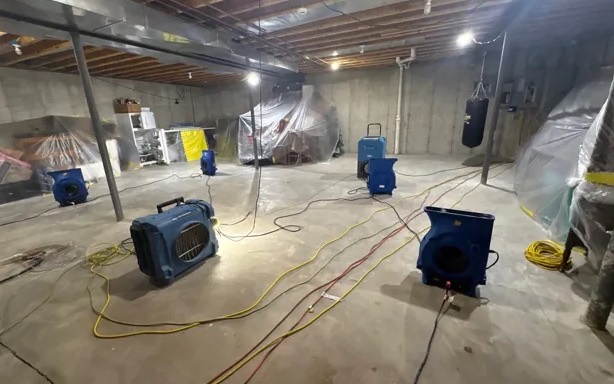
Dehumidifiers run continuously during drying, and their output is checked to track how much water is still coming out of the materials.
Basement Moisture Inspection
An inspection shows how high water wicked up the walls and how far it spread under flooring, which sets the drying plan.
Basement Water Pump Out
A pump-out removes standing water from the basement with submersible pumps, discharging it outside and away from the foundation.
Basement Drying Services
Drying plans for basements account for cool air and thick concrete, which hold moisture longer than upper floors.
Sump Pump Failure Water Cleanup
A backup pump or battery system is worth discussing with a plumber after the cleanup, since sump failures often repeat in storms.
Common Symptoms Requiring Basement Water Removal
Soggy or Wet Carpeting
Carpet that feels damp or smells sour is holding water in the pad against the concrete.
Water Stains on Walls or Ceiling
Stains on lower walls or the ceiling below a bathroom or kitchen point to a leak.
Gurgling Sounds From Drains
Gurgling floor drains or slow drains can be an early sign of a sewer line problem.
Efflorescence on Concrete Walls
White, powdery deposits on concrete walls mean water is passing through the masonry.
How Basement Water Removal Works in Exeter
Step 1: Source Control and Water Pump Out
The leak is shut off and standing water is pumped out, starting at the lowest point.
Step 2: Water Extraction
Extractors pull water from carpet, pad and concrete, and wet vacs clear corners and stairs.
Step 3: Dehumidification and Drying
Large dehumidifiers and air movers dry walls, framing and slab over several days.
Step 4: Inspection and Clearance for Repair
Final readings confirm the basement is dry and ready for drywall and flooring repairs.
Common Causes of Basement Water Damage in Exeter
Plumbing Leaks or Pipe Bursts
Supply lines, drain pipes and water heaters in the basement can leak or burst onto the floor.
Improper Landscape Grading
Soil that slopes toward the house directs rainwater straight to the basement walls.
High Water Table and Hydrostatic Pressure
A high water table presses groundwater against the slab and walls, forcing it inside.
Sump Pump Malfunction or Power Loss
A sump pump that fails mechanically or loses power during a storm lets groundwater rise.
House and Business Basement Water Removal in Exeter
Residential Basement Water Removal
In homes, a wet basement often means damaged carpet, drywall and stored belongings, plus a furnace or water heater sitting in water. Water is pumped out and the space dried.
Commercial Basement Water Removal
In commercial buildings, basements often house mechanical rooms and storage. Water is removed quickly so systems can be checked and restarted safely.
The Risks of DIY Basement Water Removal
A small puddle on bare concrete can be handled with a wet vac, towels and a dehumidifier. Call local water extraction experts if water reached carpet, drywall or framing, or covers much of the floor.
Understanding Basement Water Removal Pricing
Waterproofing and drainage work are separate costs. In Exeter, they may be needed to stop the next flood.
Basement Square Footage
Larger basements need more extraction, more drying equipment and more days of drying.
Water Depth and Volume
Deeper water takes more pumping time and usually means more materials got wet.
Affected Materials
Finished walls, carpet and laminate take more removal work than bare concrete.
Does Insurance Cover Basement Water Removal?
Photograph the water level, damaged belongings and appliances before cleanup, and keep receipts for emergency pumping and drying equipment for your adjuster.
Advantages of Local Basement Water Removal Experts
Industry Drying Standards
Water removal and drying follow industry water damage standards, with readings at every visit.
Clear Communication
You get plain updates on what was found, what was removed and how drying is going.
Post-Service Moisture Verification
Final readings are recorded before equipment leaves, so you know the basement is dry.
24/7 Emergency Basement Water Removal in Exeter
Storm night, weekend or holiday, the experts handle basement water in Exeter. Call (508) 978-2876 to get pumps running and drying started.
Call Now (508) 978-2876Basement Water Removal Serving Exeter and Surroundings
Besides Exeter, the experts handle basement pump-outs, wall drying and dehumidification in nearby North Kingstown, East Greenwich and Richmond.
- Basement Water Removal in North Kingstown
- Basement Water Removal in East Greenwich
- Basement Water Removal in Richmond
- Basement Water Removal in South Kingstown
- Basement Water Removal in West Warwick
- Basement Water Removal in Coventry
- Basement Water Removal in Hopkinton
- Basement Water Removal in Narragansett
- Emergency Damage Restoration in 02822
- Storm Damage Restoration in 02822
- Water Damage Restoration in 02822
- Water Extraction Service in 02822
- Water Leak Detection in 02822
- Water Removal Service in 02822
Answers to Top Basement Water Removal Queries
How does a basement moisture inspection work?
Moisture meters and thermal cameras check walls, floors and the slab, including behind finished walls and under flooring.
How is contaminated water handled in a basement?
With protective gear, containment, removal of porous materials and disinfection of hard surfaces before drying.
What is involved in basement leak cleanup?
Stopping the leak, extracting the water, drying the floor and walls and checking for hidden moisture under flooring.
Does basement flood cleanup include mold prevention?
Fast drying is the main prevention. Wood and concrete that stayed wet can be treated with an antimicrobial once dry.
What causes basement floor water damage?
Storm seepage, burst pipes, appliance leaks, foundation cracks and sewer backups through floor drains are the usual sources.