Wareham, MA · Plymouth County
Basement Water Removal in Wareham, MABasement Floor Water Damage & Basement Wall Drying
After a burst pipe or storm, Basement Water Removal in Wareham means basement water pump out, basement wall drying and basement drying services.
Answered 24/7
Reliable Basement Water Removal Near Wareham, Massachusetts
In Wareham, a finished basement or lower level takes more work after a flood. Carpet, pad, laminate, drywall and insulation all trap water against the concrete and framing.
Homeowners in Wareham can call (508) 978-2876 day or night when the basement is taking on water. Service also covers Bourne, Acushnet and Sandwich, with the same pumping and drying steps.
Specialized Basement Water Removal for Wareham
Basement Floor Water Damage
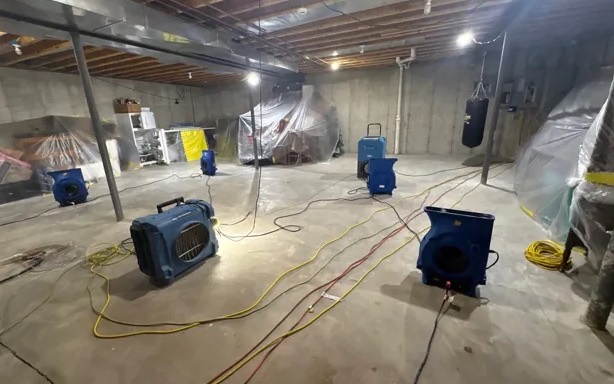
Concrete floors are squeegeed, extracted and dried with airflow and dehumidifiers until moisture readings drop.
Basement Wall Drying
Opening the bottom of finished walls lets air reach the studs and sill plate, which otherwise stay wet behind the drywall.
Basement Drying Services
After pumping, air movers and dehumidifiers dry the walls, framing and slab. Readings are taken daily until every surface is back to normal.
Emergency Basement Flooding
Help is available any hour when water is rising in the basement from a storm, a sewer backup or a burst pipe.
Basement Dehumidification
Large dehumidifiers pull moisture from basement air, which lets walls, framing and the slab release the water they absorbed.
Common Symptoms Requiring Basement Water Removal
Efflorescence on Concrete Walls
White, powdery deposits on concrete walls mean water is passing through the masonry.
Soggy or Wet Carpeting
Carpet that feels damp or smells sour is holding water in the pad against the concrete.
High Humidity and Condensation
Water on pipes and windows, or a constantly clammy feel, means basement humidity is too high.
Rusted Appliances or Furniture
Rust on appliance bases, furniture legs or metal shelving points to standing water or long-term dampness.
How Basement Water Removal Works in Wareham
Step 1: Source Control and Water Pump Out
The leak is shut off and standing water is pumped out, starting at the lowest point.
Step 2: Water Extraction
Extractors pull water from carpet, pad and concrete, and wet vacs clear corners and stairs.
Step 3: Dehumidification and Drying
Large dehumidifiers and air movers dry walls, framing and slab over several days.
Step 4: Inspection and Clearance for Repair
Final readings confirm the basement is dry and ready for drywall and flooring repairs.
Sources of Basement Water Problems
Sump Pump Malfunction or Power Loss
A sump pump that fails mechanically or loses power during a storm lets groundwater rise.
Appliance Malfunctions and Overflows
Washers, utility sinks and water softeners in the basement can overflow or leak.
Improper Landscape Grading
Soil that slopes toward the house directs rainwater straight to the basement walls.
Heavy Rainfall and Storm Flooding
Heavy rain saturates the soil and pushes water through walls, cracks and the floor joint.
Professional Basement Water Removal for All Properties
Residential Basement Water Removal
Families should keep children and pets away from basement water until power is safe and the type of water is known.
Commercial Basement Water Removal
In restaurants and shops, basement water near food or stock storage needs fast removal and cleaning before those areas are used again.
Professional Basement Water Removal Versus Do-It-Yourself
You can move belongings up off the floor and run the dehumidifier you already own. Drying soaked walls and slab needs larger equipment and readings to confirm the job is done.
Understanding Basement Water Removal Pricing
Waterproofing and drainage work are separate costs. In Wareham, they may be needed to stop the next flood.
Basement Square Footage
Larger basements need more extraction, more drying equipment and more days of drying.
Drying Time Required
Basements dry slowly, and each extra day of equipment adds to the total.
Affected Materials
Finished walls, carpet and laminate take more removal work than bare concrete.
Does Insurance Cover Basement Water Removal?
Coverage for basement water removal depends on the water source and your policy. The pros document the damage and drying, and your insurer decides what is covered.
Advantages of Local Basement Water Removal Experts
Focus on Drying Outcomes
Drying continues until readings are normal, not just until surfaces look dry.
Clear Communication
You get plain updates on what was found, what was removed and how drying is going.
24/7 Emergency Response
Help is available day or night when water is rising in the basement.
Emergency Basement Flood Response in Wareham
Basement taking on water in Wareham? Make power safe if you can, move what you can and call (508) 978-2876. Help is available 24/7.
Call Now (508) 978-2876Basement Water Removal Serving Wareham and Surroundings
Help with basement water removal reaches Bourne, Acushnet and Sandwich, plus other communities around Wareham, for finished and unfinished basements alike.
- Basement Water Removal in Bourne
- Basement Water Removal in Acushnet
- Basement Water Removal in Sandwich
- Basement Water Removal in Fairhaven
- Basement Water Removal in Middleborough
- Basement Water Removal in Plymouth
- Basement Water Removal in New Bedford
- Basement Water Removal in Falmouth
- Emergency Damage Restoration in 02538
- Storm Damage Restoration in 02538
- Water Damage Restoration in 02538
- Water Extraction Service in 02538
- Water Leak Detection in 02538
- Water Removal Service in 02538
- Emergency Damage Restoration in 02571
- Storm Damage Restoration in 02571
Basement Water Removal FAQs
What is emergency basement flooding response?
Help any hour to make power safe, stop the source, pump out water and start drying before more damage sets in.
What is the difference between a pump out and extraction?
A pump out removes deep standing water. Extraction pulls the remaining water from carpet, pad and floors.
What is involved in basement leak cleanup?
Stopping the leak, extracting the water, drying the floor and walls and checking for hidden moisture under flooring.
What equipment is used for basement water extraction?
Submersible pumps, extractors, wet vacs, air movers, large dehumidifiers and moisture meters to confirm drying.
How is contaminated water handled in a basement?
With protective gear, containment, removal of porous materials and disinfection of hard surfaces before drying.